
The short version
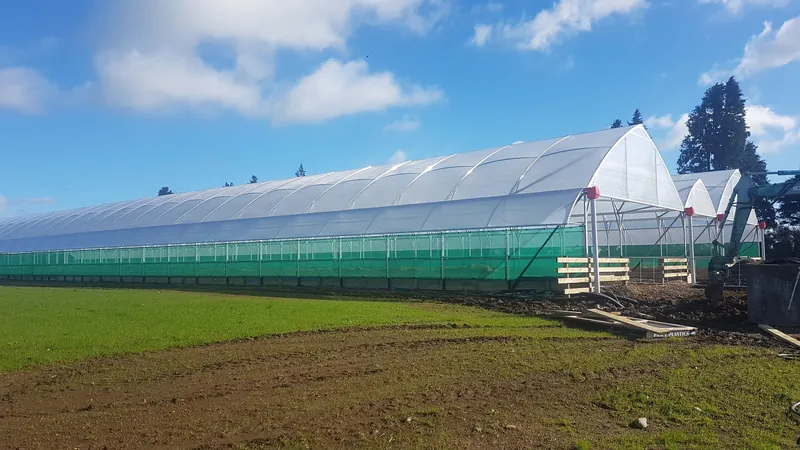
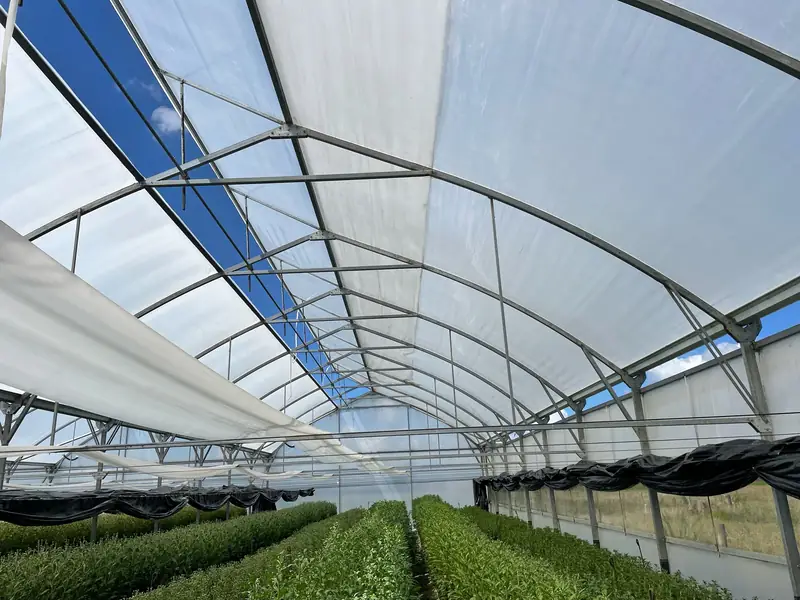
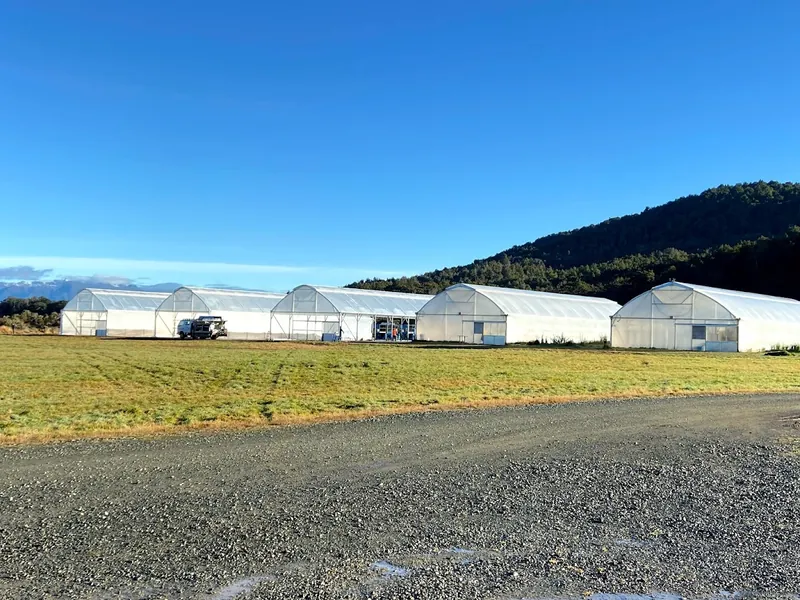
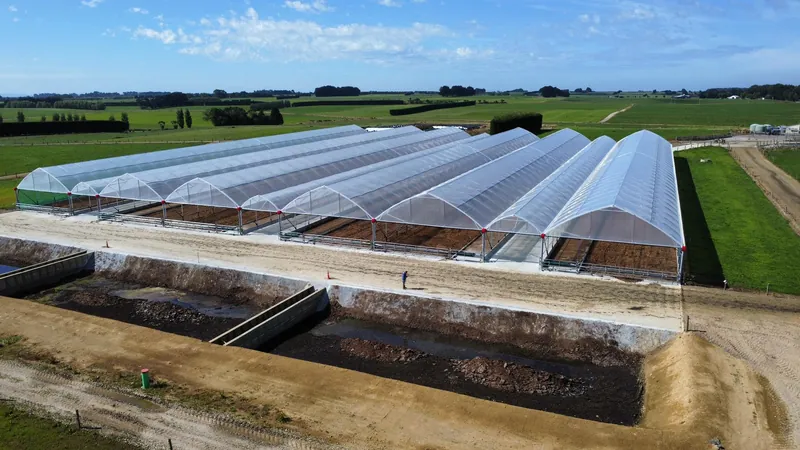
Tunnelhouses (arched hoops covered with film) give you the most covered area per dollar. Pitched roof, ridge-vented greenhouses give you better climate control and are usually chosen for higher-value, year-round crops. Neither is “better”. It depends on the crop, the site and the budget.
Tunnelhouses: strengths
- Lower cost per square metre.
- Strong, aerodynamic arched shape that sheds wind well.
- Bright, open interior.
- Flexible: easy to build in multiple bays and extend.
- Well suited to leafy greens, berries, flowers and nursery stock.
Tunnelhouses: limitations
- Ventilation is mainly through the sides and ends unless roof vents are added, which can limit control in wide, multi-span blocks.
- Lower headroom at the edges.
- Film covers need periodic replacement.
Pitched roof, ridge-vented greenhouses: strengths
- Ridge and roof vents provide excellent natural ventilation, even in larger structures.
- Higher sidewalls and gutters give more usable internal volume and crop height.
- Straightforward to add screens, automation and environmental controllers.
- Suited to year-round production of vegetables, flowers and nursery crops.
Pitched roof: limitations
- Higher upfront cost per square metre.
- More complex structure and installation.
- Climate control equipment adds to the investment, which should be justified by crop value.
How to choose
Ask yourself three questions. How sensitive is my crop to temperature and humidity? How valuable is it per square metre? How much of my site is exposed to wind?
High-value, sensitive, year-round crops tend to justify a pitched roof, ridge-vented design. Hardy, seasonal or lower-value crops often do better in tunnelhouses. And plenty of growers use both: tunnelhouses for hardening off, pitched roof houses for the crops that need precision.